
In the world of industrial and infrastructure projects, choosing the right delivery model can make or break a project’s success. Projects can be executed through a variety of approaches, from standalone engineering or construction services to fully integrated EPC. Among these, two models— Engineering, Procurement and Construction (EPC) and Engineering, Procurement and Construction Management (EPCM)—are frequently discussed and often misunderstood. While they share similar terminology, their structures and responsibilities differ, making it critical for project owners to understand these distinctions to optimize cost, risk and control.
What Is Fixed Price EPC?
Fixed price EPC is a turnkey project delivery model where a single contractor is responsible for all aspects of the project, from design and procurement to construction and pre-commissioning / commissioning. The EPC contractor assumes full responsibility for delivering the project on time and within budget, often under a fixed-price contract.
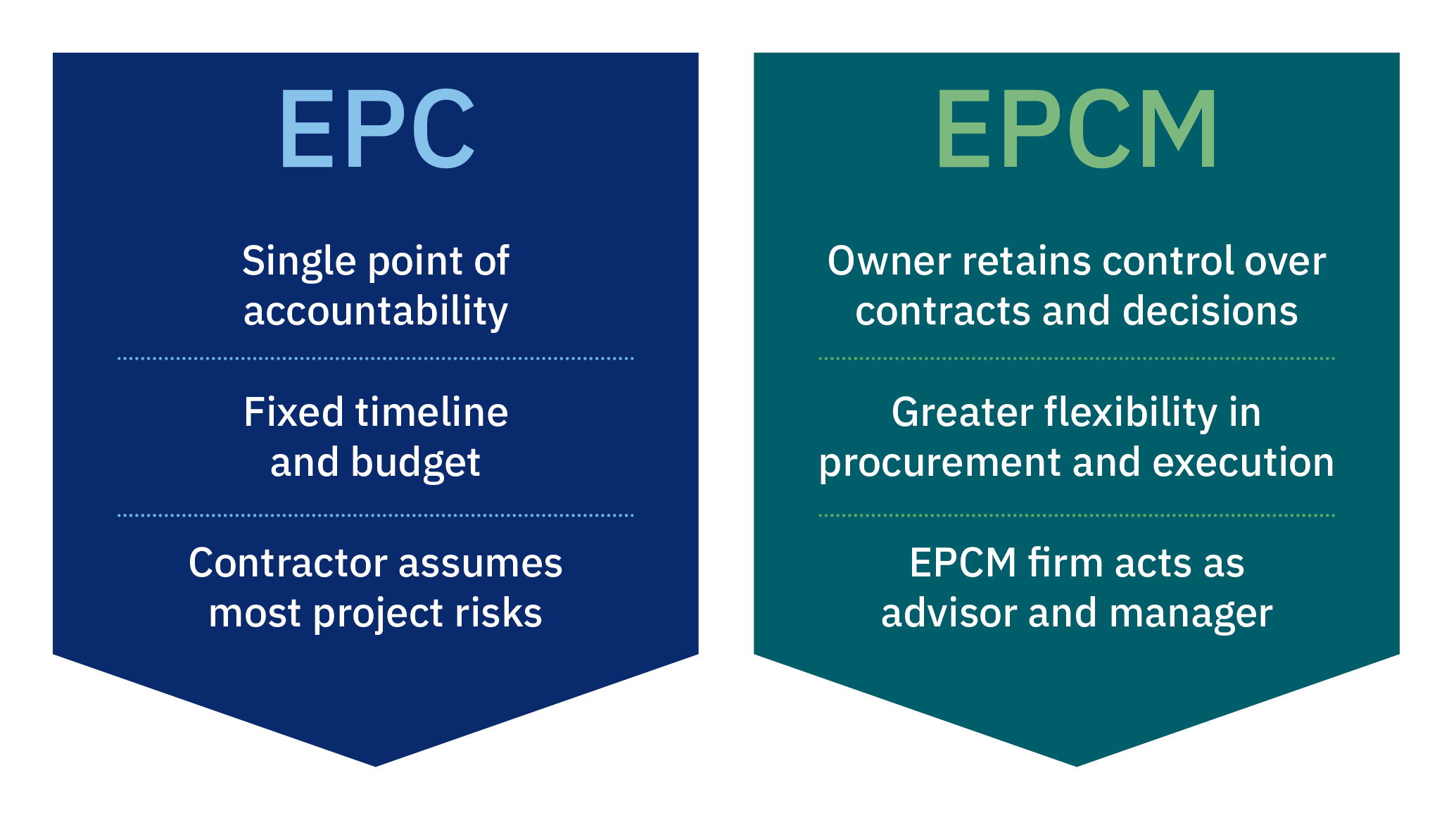
Key characteristics of EPC:
- Single point of accountability
- Fixed timeline and budget
- Contractor assumes most project risks
What Is Reimbursable EPCM?
Reimbursable EPCM is traditionally a model where the contractor manages the project on behalf of the owner but does not perform the construction work directly. Instead, the owner contracts with multiple construction vendors and suppliers, while the EPCM firm provides oversight, coordination and technical expertise.
Key characteristics of EPCM:
- Owner retains control over contracts and decisions
- Greater flexibility in procurement and execution
- EPCM firm acts as construction expert and manager
Key Differences Between EPC and EPCM
- Risk Allocation
- Fixed Price EPC: Contractor bears most of the risk, including cost overruns and schedule delays.
- Reimbursable EPCM: Risk is shared, with the owner retaining more responsibility and exposure.
2. Cost Structure
- EPC: Typically, a lump-sum or fixed-price contract.
- EPCM: Cost-plus or time-and-materials with fee at risk / target price are common, offering more transparency but less upfront predictability.
3. Project Control and Flexibility
- EPC: Less flexibility; changes are more costly and complex.
- EPCM: More flexibility to make adjustments if the scope is still being nailed-down.
When to Choose EPC vs. EPCM
Project Complexity
- EPC is ideal for well-defined projects once scope is frozen or nearly frozen.
- EPCM suits evolving projects where adaptability is key such as heavy brownfield with anticipated discoveries or high known-unknowns
Owner’s Internal Capabilities
- EPC is better for owners with limited project management resources.
- EPCM works well when owners have strong internal teams and want more control.
Budget Certainty vs. Flexibility
- EPC is the choice for budget certainty and risk mitigation.
- EPCM is the choice when flexibility and transparency are more important than fixed costs.
Finding the Right Fit
Choosing the right solution isn’t an all-or-nothing decision. Many projects require a customized mix of services. S&B is an expert at partnering with clients to determine the right level of support—whether that’s full EPC responsibility or targeted expertise in engineering or construction—to deliver results efficiently and effectively.
Case Examples
EPC for New Greenfield Chemicals Facility
A large chemicals company needed to add a duplicate train to expand capacity of an existing product line, requiring minimal tie-ins or disruptions to on-going operations. By choosing an EPC model, the company was able to take more of a balanced risk profile with the contractor, ensuring a fixed budget, and streamlined execution under a single point of accountability.
EPCM for Brownfield Refining Debottleneck
A refiner opted for an EPCM approach to debottleneck and add capacity to an existing unit. The project required frequent design changes and specialized equipment sourcing. EPCM allowed the owner to maintain control, adapt to evolving needs, and leverage internal expertise.
Conclusion: A Decision Framework
Choosing between EPC and EPCM depends on your project’s goals, complexity, and internal capabilities. Here’s a quick decision framework:
- Choose EPC when you want a turnkey solution with minimal owner involvement and high budget certainty.
- Choose EPCM when you need flexibility, have strong internal resources, and want to stay closely involved in execution.
When to consider alternatives:
- Engineering-only with Constructability: Best suited for projects where the owner wants to mature the design while actively shaping execution strategy. This model integrates construction expertise early, through constructability reviews, execution planning, modularization studies, and cost/schedule validation—without committing to a full EPC or EPCM structure. It allows owners to reduce technical and execution risk, improve cost and schedule confidence, and preserve options on contracting strategy before moving into procurement or construction
- Construction-only: Best suited for projects where the engineering phase is complete and the owner needs a trusted partner to execute construction safely, efficiently and to specification.
Understanding the differences between EPC and EPCM, and other available alternatives, empowers project owners to make informed decisions that align with their strategic priorities — and ultimately, deliver successful outcomes.
Explore how S&B can support your next project, whether through full EPC delivery or a tailored scope at sbec.com/expertise.

.png)